The house, a structure so fundamental to human existence, is far more than just a roof and four walls. It is a profound artifact, a mirror reflecting the evolving needs, technologies, cultures, and aspirations of its inhabitants. Tracing the evolution of house forms is akin to charting the journey of human civilization itself, moving from simple, temporary shelters to the complex, hyper-connected dwellings of the modern age.
🏕️ From Nomadic Shelter to Permanent Settlement
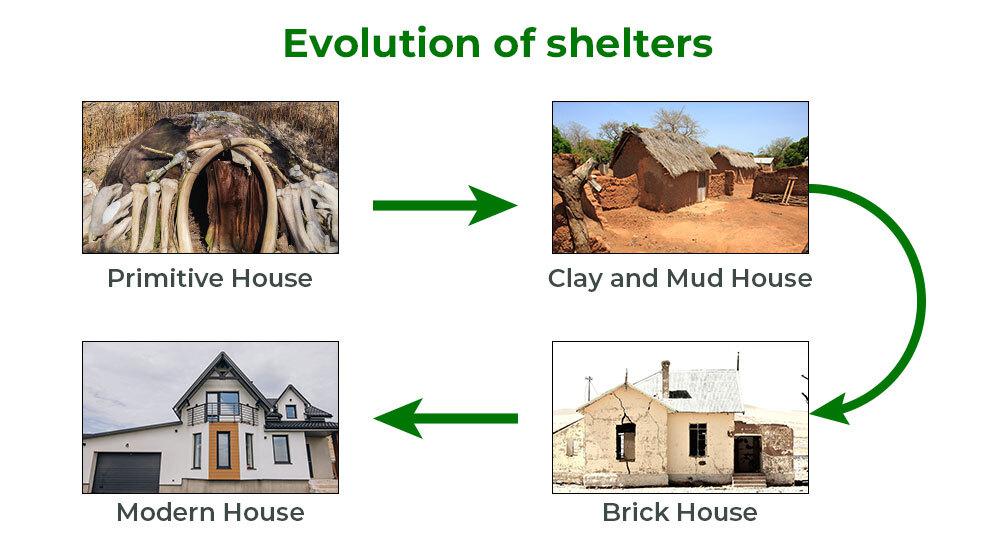
The earliest human shelters were driven by the most basic necessity: survival. Nomadic hunter-gatherers required structures that could be quickly erected and dismantled, utilizing readily available materials like animal hides, bones, and wood. Forms such as the tent, the wigwam, and the yurt provided essential protection from the elements and predators, showcasing ingenious, lightweight designs perfectly suited for a mobile lifestyle.
The pivotal shift came with the Agricultural Revolution approximately 10,000 years ago. As humans began to cultivate land and domesticate animals, the need for permanent settlement arose. This led to the first enduring residential structures, often using local, durable materials—mud-brick and stone in the Middle East, timber and wattle-and-daub in Europe, and packed earth in various regions. Early permanent homes, such as the famous circular or rectangular huts, were generally single-room spaces where all aspects of life—cooking, sleeping, and socializing—occurred in a shared environment.
🏛️ Classical and Medieval Developments
Ancient civilizations introduced new levels of complexity and social stratification into housing design. The Romans, for instance, perfected urban living with their domus (single-family townhouses) and insulae (multi-story apartment blocks for the poor). The domus introduced the atrium—a central courtyard—as a core architectural element, allowing light, air, and social focus, and showing an early recognition of the importance of separated, specialized domestic space. Furthermore, Roman engineering innovations, like hypocaust central heating, demonstrated an early desire for enhanced comfort.
The Medieval period in Europe saw the rise of vernacular architecture, where house forms were heavily dictated by local climate and available resources. Homes for the peasantry, often built with a heavy timber frame and infill (like half-timbered houses), were typically functional, multi-purpose structures, sometimes sharing space with livestock for warmth. For the elite, the castle and later the manor house evolved, prioritizing defense and status. The Great Hall was the central feature of the manor, a large, communal space that eventually began to lose its multi-functional role as smaller, private chambers and drawing rooms were added—a significant step toward specialized room usage.
👑 The Dawn of Specialization: Renaissance to Victorian Era
The Renaissance brought a return to classical ideals of symmetry, proportion, and order, heavily influencing residential design for the wealthy. The Georgian and Federal styles in subsequent centuries continued this trend, emphasizing balanced facades and a clear separation between public and private spaces. Rooms were increasingly designated for specific activities: the parlor for formal receiving, the dining room for meals, and separate bedrooms for privacy. This period solidified the concept of the house as a complex machine for living, divided by social function.
The Victorian Era (19th century), fueled by the Industrial Revolution, embraced mass production and a highly decorative aesthetic. Homes became symbols of prosperity, characterized by intricate detailing, asymmetrical facades, and a labyrinth of specialized rooms—libraries, conservatories, pantries, and servants’ quarters. The introduction of indoor plumbing, gas lighting, and later electricity also began to fundamentally change the internal mechanics and layout of the house.
🏗️ Modernism and the 20th-Century Revolution
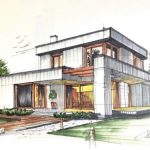
The early 20th century witnessed a radical rejection of the ornamentation and clutter of the Victorian age. The Modernist movement championed the principles of “Form Follows Function” and simplicity. Architects like Le Corbusier and Frank Lloyd Wright redefined residential architecture:
- Le Corbusier’s work, epitomized by the Villa Savoye, promoted the house as a “machine for living,” utilizing reinforced concrete to create open floor plans, flat roofs, and horizontal “ribbon windows.”
- Frank Lloyd Wright’s Prairie Style emphasized horizontal lines, low-pitched roofs, and the integration of the house with its surrounding landscape, notably through the development of the open-plan living space—a design that blurred the lines between the living room, dining room, and kitchen. This open concept fundamentally transformed family interaction and domestic flow.
Post-World War II, the housing boom popularized affordable, mass-produced styles like the Ranch House in the US, prioritizing simplicity, a single-story layout, and ease of construction.
💡 Contemporary Trends: Technology and Sustainability
Today’s house forms are shaped by a confluence of technological advances and environmental concerns. The rise of urbanization has led to the proliferation of high-rise apartments and denser housing typologies. Internally, the modern home is characterized by:
- Smart Home Integration: Technology is woven into the structure, controlling security, climate, and entertainment.
- Flexibility: Spaces are designed to be multi-functional, easily adapting to working from home, fitness, and relaxation.
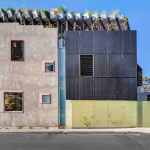
- Sustainability: Eco-friendly designs incorporating passive solar heating, green roofs, rainwater harvesting, and the use of sustainable building materials are becoming standard, reflecting a global conscience regarding climate change. The future is leaning towards net-zero energy homes and prefabricated or modular construction for efficiency.